Control who gets in, wired correctly to release on the fire alarm.
Door entry lets a visitor at the front of the building speak to whoever they are visiting and get let in, usually a communal entrance. Access control decides which people can open which doors inside the building, and when, typically offices, plant rooms and stores. The two terms get used interchangeably, but they are different systems. Most buildings need both, designed together as one scheme with one team responsible for the fire-safety wiring that ties them in.
Door entry
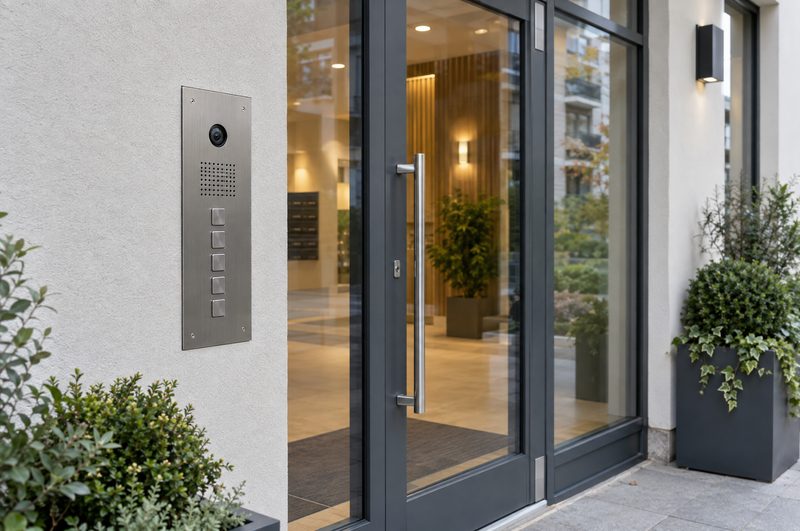
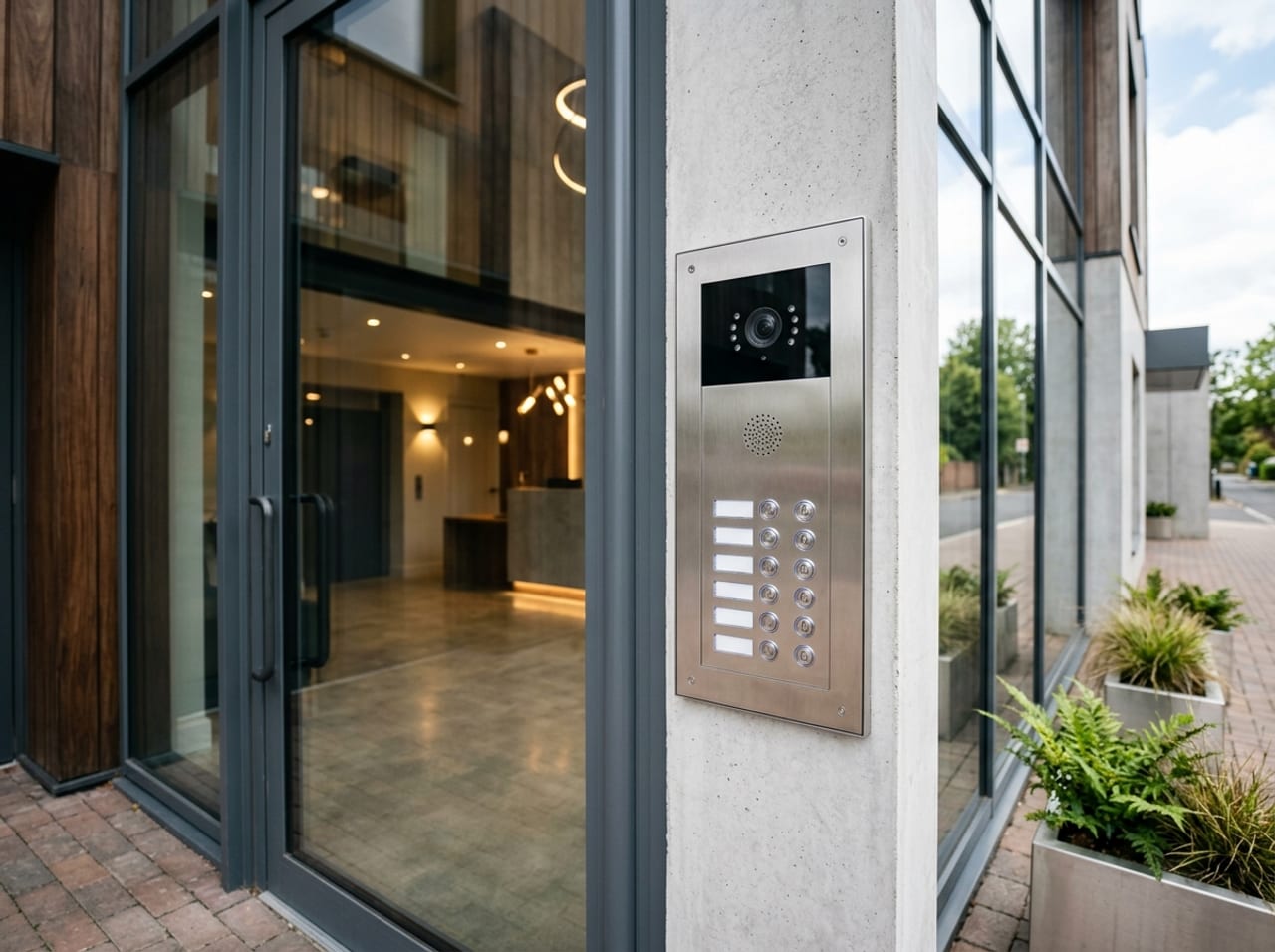
A panel at the entrance lets a visitor call through to a resident or member of staff, who releases the door. Audio-only handles the basics; video adds a camera so whoever answers can see who is there first. Residents can answer on a wall handset or, increasingly by default, on their phone through an app.
Per-flat call codes
Each flat has its own code, so a visitor selects the flat rather than one shared line for the block.
Trade or courier code
Opens the communal door for regular deliveries without going through every resident.
GSM entry unit
Works over the mobile network for a yard, compound or standalone site with no wired line.
We work with Fermax door entry systems, and other established manufacturers depending on the building and budget. We are not a Fermax dealer or approved partner, we simply fit and support their kit.
01 / 03
A handset in each flat, a panel at the door and a release that works first time.
Access control
Access control replaces or supplements keys with a credential that can be granted, scheduled and revoked without changing a lock: fobs and cards, mobile credentials from a phone, or a shared keypad code for lower-security doors.
System type
How it's managed
Standalone
A single door with its own small controller, no central management.
Networked
Every door reports back to one system on site.
Cloud-managed
Add, remove and review access from a browser across multiple sites.
A proper system logs who opened which door and when, useful for insurers and for investigating an incident. Time zones and door groups restrict access by hours or role, and anti-passback stops one credential letting two people through on a single tap. For visitors, a sign-in log or temporary digital credential keeps a record without handing out permanent access.
Fire and the law
Every access-controlled door on a means of escape has to release automatically when the fire alarm activates. The distinction that matters is fail-safe, which unlocks when power is removed and is what an escape route needs, versus fail-secure, which stays locked through a power cut and suits a server room or secure store, never an escape route. Getting this the wrong way round is one of the most common and most serious mistakes we find on takeover surveys. We also fit green break-glass emergency release units on escape routes, a mechanical backup independent of power or the access control system.
BS 7273-4 category
Actuation
A
Release driven directly by the fire alarm system, no other option.
B
Release directly by the fire alarm, or manually.
C
Local arrangement, its own detection independent of the main fire alarm.
Which category applies depends on the door, its location on the escape route and the building's fire strategy, not something to guess at after installation. Under the Regulatory Reform (Fire Safety) Order 2005, the responsible person must keep means of escape usable at all times the building is occupied; access control that fails to release on alarm activation is a direct failure of that duty. We design and commission every installation with this in mind and integrate it with your fire alarm systems and, where relevant, your AOV and smoke ventilation strategy.
02 / 03
A locked door must still open in an emergency. The green break glass and fire alarm link make sure it does.
Communal blocks
Managing agents, Right to Manage companies and housing associations deal with residents changing and fobs going missing. Access control solves this cleanly: a lost fob is deactivated on the system rather than triggering a lock change, and a new one is issued within minutes. We set up the lost-fob reporting and reissue process with whoever manages the building day to day, so it does not depend on us being on site; larger blocks often go cloud-managed so the managing agent or a resident committee can handle routine changes themselves.
Access logs are personal data once tied to an individual, so the same UK GDPR principles that apply to CCTV apply here: keep only what you need, for as long as you need it, and be able to respond if someone asks what you hold on them. We design sensible default retention; for anything specific to your building, the ICO's guidance is the source to check, not us.
Five quick questions, about a minute. We read every brief and aim to call you back within one working day, no obligation. Rather talk now? Call 01922 660923.
1 of 5System
FAQ
What building managers ask us.
What is the difference between door entry and access control?+
Door entry is the system at the main entrance that lets a visitor speak to someone inside and get let in, usually the communal front door of a block. Access control governs the doors inside the building, deciding which people can open which doors and when. Most buildings need both, designed to work together.
Does an access-controlled door have to open in a fire?+
Yes. Every access-controlled door on a means of escape must release automatically when the fire alarm activates. This is a fail-safe locking requirement, backed by BS 7273-4 for how the release is actuated, and it sits under the responsible person's duty to keep escape routes usable under the Regulatory Reform (Fire Safety) Order 2005.
What is the difference between fail-safe and fail-secure locks?+
A fail-safe lock unlocks when power is cut, which is what escape routes need. A fail-secure lock stays locked when power is cut, which suits a door like a server room where security needs to hold even through a power failure. Fitting the wrong type on an escape route is a common and serious mistake.
What happens when a resident loses their fob?+
The lost fob is deactivated on the system so it can no longer be used, and a replacement is issued. Nobody needs to re-key the building's locks, which is one of the main reasons blocks move from keys to access control in the first place.
Can access control integrate with our fire alarm and CCTV?+
Yes. We design access control to release correctly on a fire alarm signal as standard, and it can be tied into your CCTV so you can see who used a particular door alongside the access log.
Do you take over systems installed by someone else?+
Yes. We regularly survey and take on door entry and access control systems fitted by other companies, including checking that fire release wiring is correct, which is one of the most common faults we find on a takeover survey.