One communal headend, one system, the same reliable reception at every outlet in the building.
An Integrated Reception System (IRS) is a single headend that receives TV, satellite and radio once and distributes it by cable to every flat, instead of each flat fitting its own aerial or dish. Central AOV designs, installs, tests and maintains IRS systems for new build and retrofit across the UK.
Call the office on 01922 660923, Monday to Friday 09:00 to 17:00, for a free phone consultation.
What the system is built from
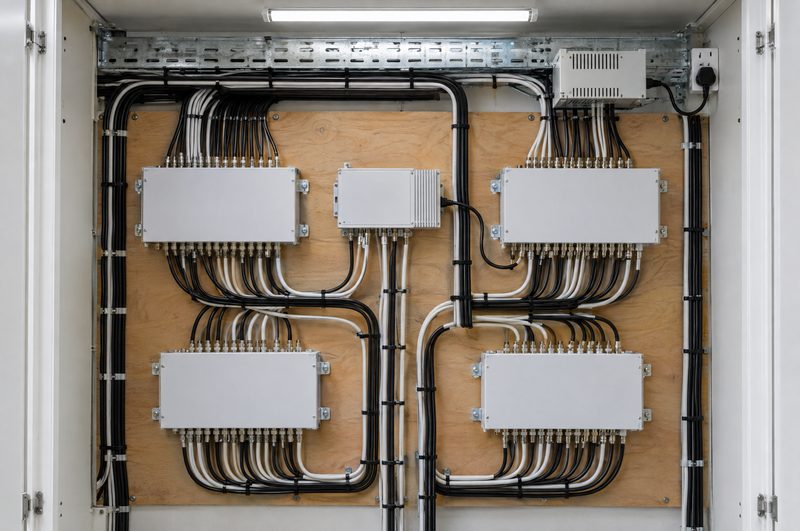
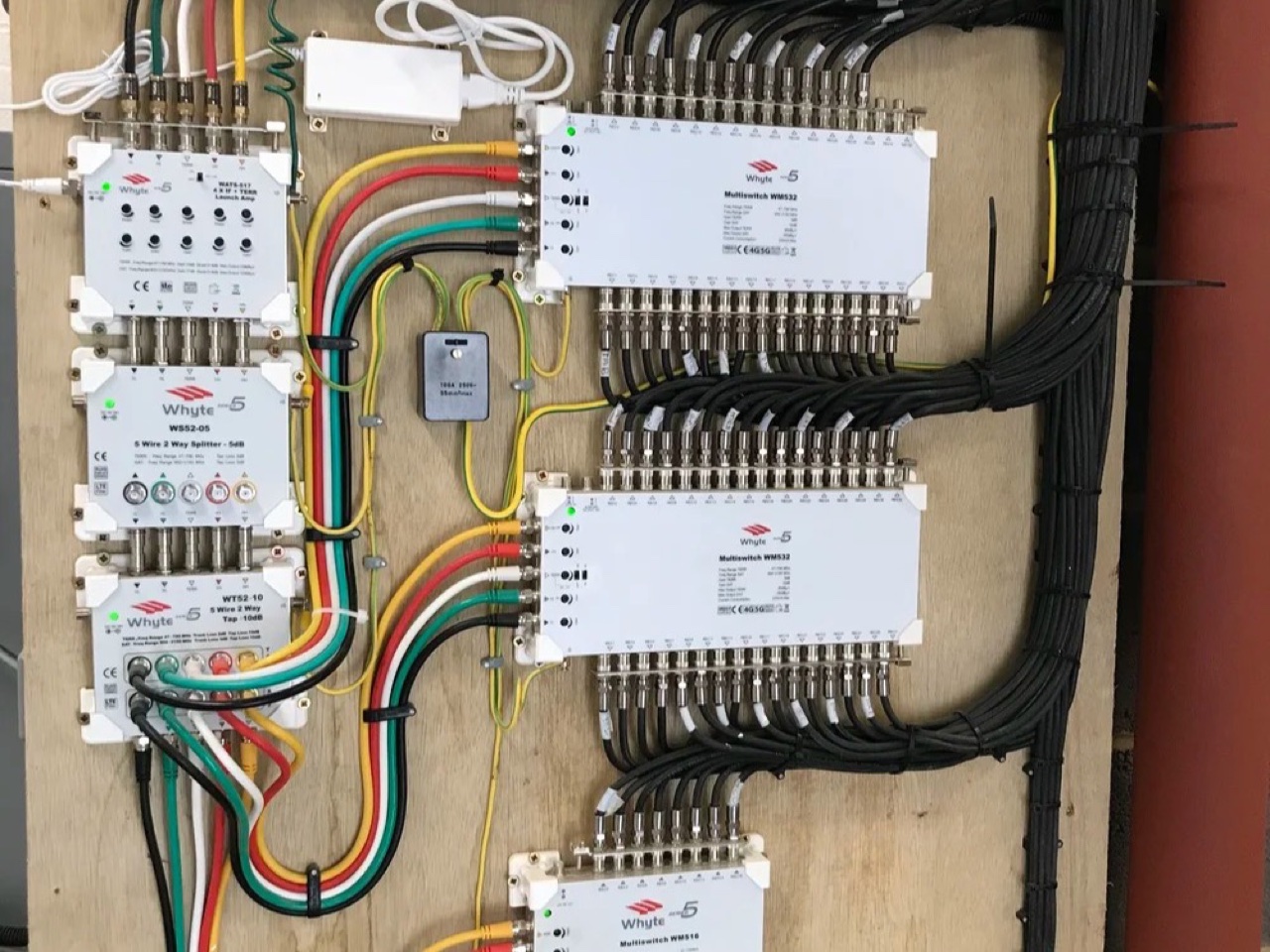
Everything starts at the headend, a rack in a plant room or roof-level cupboard where every incoming signal is received, processed and combined. Amplifiers make up for cable loss over long runs, and launch amplifiers push the combined signal out with enough strength to reach the far end of the building.
Multiswitch
Splits the satellite feed so each flat has its own independent line.
dSCR / Unicable
Carries several independent satellite tuners down one cable, less cabling needed.
Communal aerial
DTT (Freeview), extendable to FM and DAB radio.
Fibre distribution
Used on some newer developments, more channels and headroom for future services.
Outlet plates
Wired back to the headend through proper containment, so the system stays serviceable.
Which approach we use depends on the building's existing cabling, outlets needed per flat, and whether it is new build or a retrofit working within existing containment.
Cabling and containment
Most of an IRS lives out of sight, in cable runs threaded from the headend to every outlet through risers, ceiling voids and cupboards. Proper containment, correctly sized cable and clear labelling at every joint mean a fault can be traced quickly, rather than turning into a search. On retrofit projects we survey what is already there and design around it wherever it is fit for purpose, rather than defaulting to a full strip-out.
01 / 03
The riser does the real work. Good cabling here is what every flat relies on for a clean signal.
Built to CAI practice
IRS installation follows CAI (Confederation of Aerial Industries) practice, and signal levels are checked against the relevant IEC and EN standards, so every outlet gets a signal that is neither too weak nor too strong. On new developments, NHBC and developer specifications commonly set out what is expected of the communal reception system, so we design to these standards from the outset rather than checking at the end.
Why one system beats a roof full of dishes
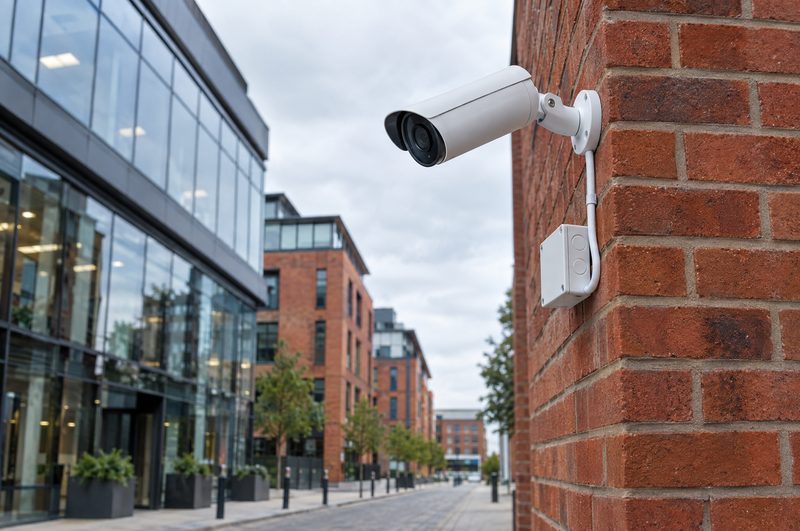
Blocks left to residents to sort their own reception end up with mismatched dishes and aerials, each one a separate roof penetration and a possible leak point, and often outside what individual leaseholders are entitled to fit without permission. Developers specify an IRS as the tidy, compliant default. Housing associations and managing agents get reception under one system they control. Leaseholders never have to fight the freeholder for permission to fit their own dish.
02 / 03
One shared system keeps the facade clear and gives every resident the same services.
Survey, design, test, hand over
Stage
What happens
Survey
Plans for a new build, or a walk of an existing block, to set outlet count, headend location and cable routes.
Design
Headend equipment, amplification and multiswitch or dSCR arrangement, agreed before anything is fitted.
Test
Signal levels checked at outlets around the building, not just at the headend.
Hand over
Documentation recording what was installed and what it tested at.
We also take on fault-finding and full takeovers of IRS installations that were not done properly the first time. Poor signal at the far end of a building is the most common complaint, usually caused by undersized cabling, an unbalanced headend or a multiswitch beyond its rated capacity, and we will tell you plainly what is wrong before any work starts.
Five quick questions, about a minute. We read every brief and aim to call you back within one working day, no obligation. Rather talk now? Call 01922 660923.
1 of 5System
FAQ
What developers and property managers ask.
What does IRS stand for and what does it do?+
IRS stands for Integrated Reception System. It is a single communal headend that receives TV, Freeview, satellite and radio signals once and distributes them to every flat in a building over one cabled network, instead of each flat needing its own aerial or dish.
Will an IRS support Sky Q?+
Yes. IRS systems are designed to carry Sky Q and Freesat using either a multiswitch or dSCR (Unicable) distribution, depending on the building. We specify whichever suits the number of outlets and the existing or planned cabling.
Why do developers install an IRS instead of letting residents fit their own dishes?+
One communal system avoids a roof covered in individual dishes and aerials, each one a separate penetration and a maintenance headache. It also satisfies planning restrictions that stop individual leaseholders making external alterations, and it meets what NHBC and most developer specifications expect on a new build.
Can you fix a poorly performing IRS someone else installed?+
Yes. We regularly survey and take over existing systems, most often called out for poor signal at the far end of a building, which is usually down to undersized cabling, an unbalanced headend, or a multiswitch running beyond its rated capacity.
What standards does an IRS need to meet?+
Installation follows CAI (Confederation of Aerial Industries) practice, with signal levels checked against the relevant IEC and EN distribution standards. New developments are usually also expected to meet NHBC or the developer's own specification.
Do you supply documentation after installation?+
Yes. Every system we commission is tested at outlets around the building and handed over with a record of what was installed and what it tested at, so it can be maintained or extended by anyone in future.